

If you work with heavy glass panels, Cowest Machinery’s robots can make your job easier. But how do you pick between their two popular models, the WSR-800LA and WSR-1000M? Let’s break down the key differences in plain language.
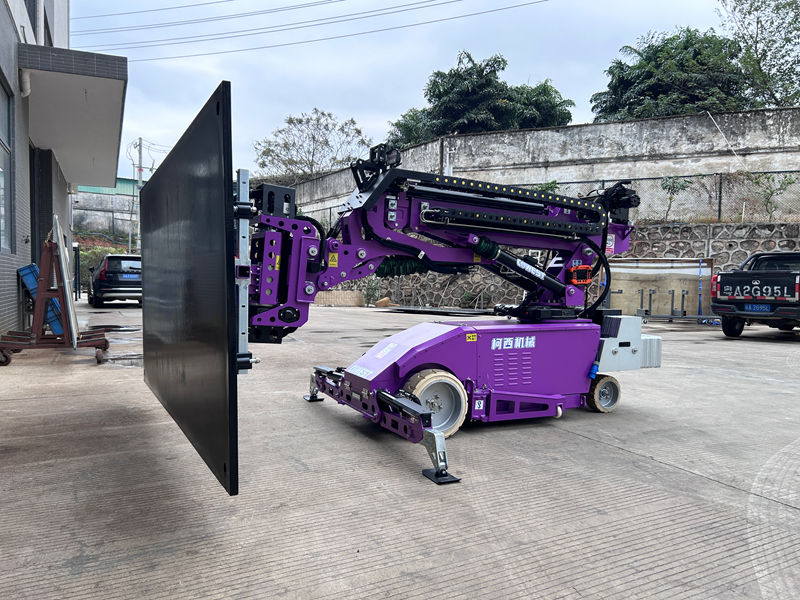
1. Power and Height
- The WSR-800LA can lift 800 kg (like a small car) and reach up to 4.6 meters high. It’s great for standard glass walls or mid-sized buildings.
- The WSR-1000M is stronger, handling 1,000 kg and reaching 5 meters. It’s better for huge glass panels in skyscrapers.
2. Flexibility
- The WSR-1000M shines here. Its arm can stretch 2.2 meters, tilt sideways (180°), spin non-stop (360°), and even make tiny angle adjustments. This helps in tight spaces or tricky shapes.
- The WSR-800LA can rotate its suction cups, but it’s less adjustable for arm rotating.
3. Extra Functions
The WSR-1000M works like a Swiss Army knife. Swap its suction cups for forks or hooks, and it can lift crates or machinery. The WSR-800LA focuses only on glass, though it offers optional Winch,Forklift and customized attachments.
4. Controls
The WSR-1000M and WSR-800LA both comes with a wireless remote—you can operate it from a safe distance.

5. Battery and Weight
Both run 6-8 hours per charge. The WSR-1000M uses a heavier 24V battery system, making it steadier for tough jobs. But it’s also bulkier (2,977 kg vs. 800LA’s 2,190 kg), so check if your floors can support it!
6. Best Uses
- WSR-800LA: Perfect for everyday projects where cost matters. Think office buildings or regular glass walls.
- WSR-1000M: Built for big-budget jobs needing heavy lifting, tricky angles, or multiple tasks (like moving equipment).
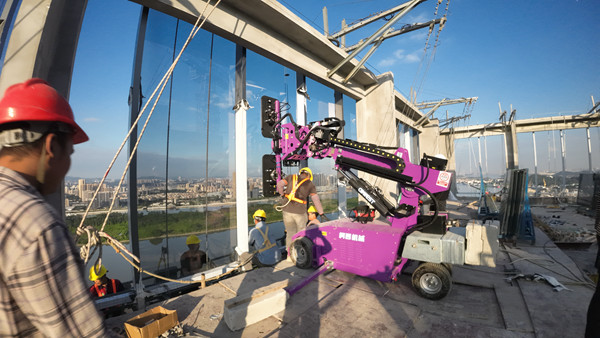
The Bottom Line
Choose the WSR-1000M if you need maximum power and flexibility for complex jobs. But if you want something simpler and lighter for standard glass work, the WSR-800LA saves money without cutting corners. Both keep workers safe with alarms, anti-tip systems, and emergency stops.